
Built by engineers who ran out of patience with guessing
AMI Labs was founded in 2023 by a team that spent years watching reliability engineers make setpoint decisions based on intuition and hand-drawn trend charts. We built the software they needed and did not have.
- Founded
- 2023
- Headquarters
- Paris, FR
- Funding
- Angel-backed
The problem we set out to solve
Process engineers have two problems. The first is that every time they adjust a setpoint, they are running a live experiment on an expensive machine. The second is that the data to predict what will happen already exists in the historian, but it is locked in raw time-series form that standard analytics tools cannot make actionable.
We started AMI Labs after seeing the same scenario at multiple facilities: an engineer wants to tune a control loop, opens the historian, stares at trend plots for an hour, makes a conservative change, and waits. The machine either responds as expected or it does not. There is no simulation layer, no prediction layer, no way to ask "what would happen if?"
The world model approach we use is rooted in causal machine learning research. It treats each machine as its own physical system with specific causal relationships between actuator variables and response channels. Instead of fitting a generic regression, we learn the machine's actual dynamic structure from its own history. The result is a model that is both accurate for that specific machine and interpretable to the engineers who run it.
We received angel backing of $1.5M in September 2025 and have been deploying with process manufacturers, utilities, and specialty chemicals producers across France and the broader EU since Q4 2025.
What we believe
Machine-specific beats generic
Data stays on your network
Causality over correlation
Engineers in the loop
The team
Three co-founders with backgrounds in time-series learning systems, real-time sensor infrastructure, and probabilistic modeling for physical systems.
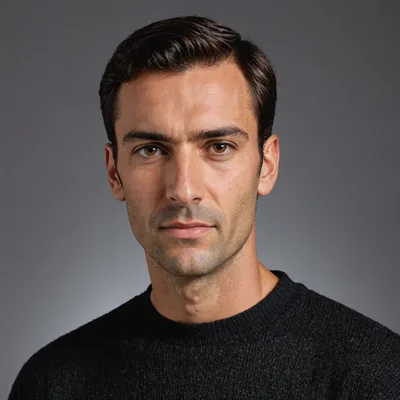
Alexandre Lebrun
CEO & Co-Founder
Spent years building time-series learning systems for physical environments where a wrong prediction has direct operational cost. Drove AMI Labs' product direction from raw sensor modality to causal world-model architecture.
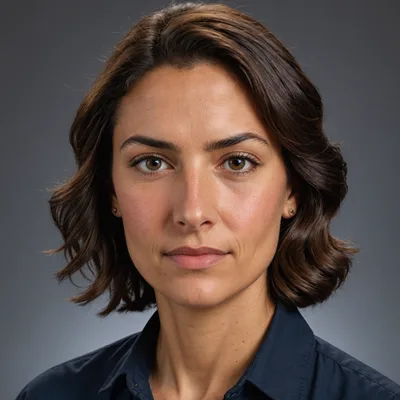
Sophie Marchetti
CTO & Co-Founder
Background in distributed systems and real-time data pipelines. Built sensor data infrastructure for process equipment monitoring before co-founding AMI Labs. Owns on-premise deployment architecture and integration with OPC-UA and historian systems.

Theodore Baudin
Head of Research
Specializes in probabilistic machine learning and uncertainty quantification for physical system modeling. Developed Gaussian process methods adapted to industrial time-series data and leads the core prediction research at AMI Labs.